Can of the Year Awards 2024
Gilded cans
The best of the best – Mark McCord reviews the cans that won gold in the 2024 Cans of the Year Awards and why, unusually, a bottle was crowned the competition’s overall Can of the Year
Strong, good-looking and easy to recycle: it’s no wonder that metal packaging is increasingly adopted by brands across the world, especially those launching new products.
Metal’s popularity is one of the reasons why the judging panel for The Canmaker Cans of the Year Awards were presented with such a superb line-up of entries in each of the competition’s 11 categories. The judges, drawn from throughout the canmaking industry, also had the tough task of selecting the overall Can of the Year from one of the category winners, as is the tradition of the contest.
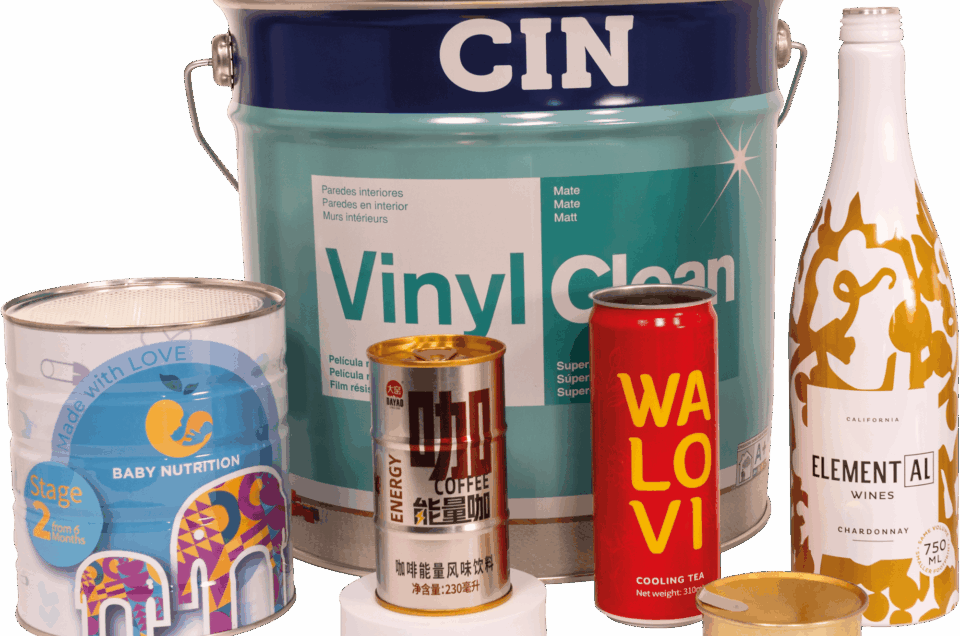
That winner – which also won gold in the Bottles category – came in the form of a stunning 750ml wine bottle shaped like a traditional glass equivalent, but made from impact-extruded aluminium.
US-based CCL Container made the bottle for California-based Bogle Family Vineyards’ Element[AL] wine range and represents something of a departure in canmaking.
While cans are the packaging of choice for many new beverage brands, some sectors, such as the wine industry, have yet to fully embrace the trend.
CCL’s bottle may change this, given its stylish appearance and the fact that being made from aluminium it is 60% lighter than a standard glass wine bottle, enabling more to be shipped at less cost and less risk
of damage.
The Element[AL] wine range comes in four varietals: chardonnay, rosé, pinot grigio and pinot noir. The bottles for each grape feature directly-printed specific artwork and a matching-coloure metal resealable cap.
The judging panel was immediately attracted to the chardonnay bottle and its golden design. One commented that “it fits easily into peoples’ perceptions of a wine bottle, while pushing forward sustainability”.
Bogle Family Vineyards said switching from glass to aluminium is a key part of its drive to reduce its greenhouse gas (GHG) emissions. Glass bottles are the single-largest contributor to the wine industry’s carbon dioxide (CO2) discharges, according to the UK-based industry organisation, The Wine Society.
In addition, glass can only be recycled a limited number of times, is heavy to transport and has the risk of shattering in transit.
Fresh approach
CCL Container wasn’t the competition’s only multi-award winner. Japan-based Toyo Seikan, in collaboration with canstock manufacturer UACJ Corporation, won gold in the Ends, Caps & Closures division, took the Sustainability prize, and the coveted Delegates’ Choice Award that attracts the most votes from attendees at the Summit.
Toyo Seikan’s aluminium 204-diameter EcoEnd made for beer cans boasts a GHG emission reduction of about 40%. Yet it is made to the same gauge of a standard end so that canmakers that use it do not
need to adjust their seaming tools. Toyo Seikan and UACJ developed an alloy that enables the end to be made from a higher proportion of recycled aluminium.
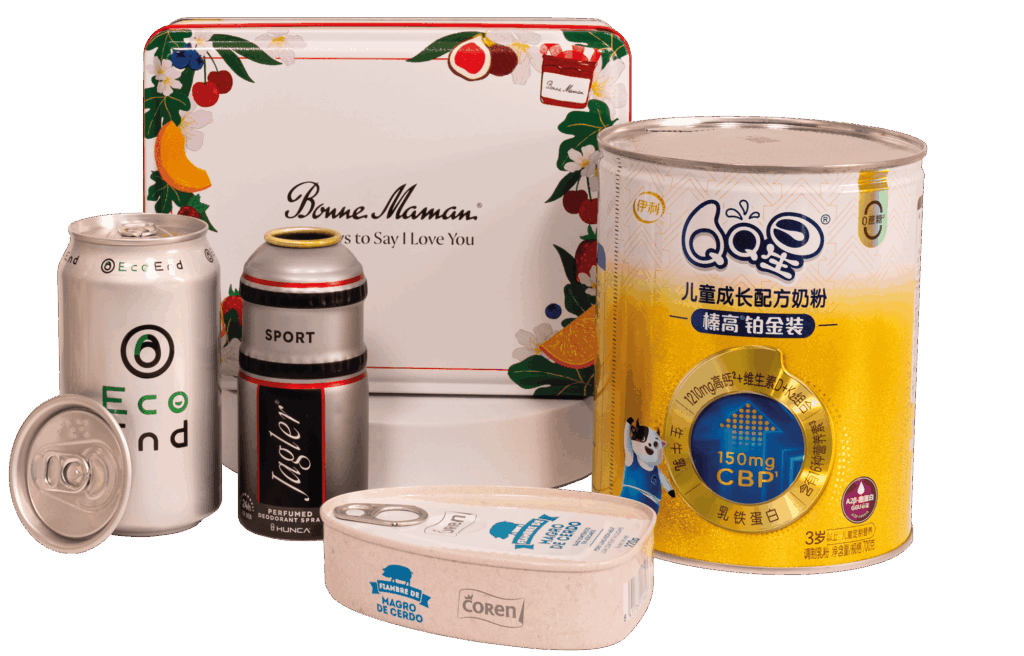
The development goes a long way towards the goal of using a large proportion of recycled aluminium both for a can’s body and its end, all while using an alloy with strength that maintains the can’s necessary pressure performance.
The judges applauded the “novel engineering”, believing that the EcoEnd has the potential to have a major impact in the industry because it “offers a definitive saving in metal use, recyclability and CO2 emissions”.
Bringing new attributes to a familiar packaging type was a winning formula for Brasilata too. The Brazilian canmaker took gold in the Prototype category with judges impressed by both the design and the security features offered by its Innocan digital printing technology used for a baby formula can with a peel-off lid.
Brasilata Labs developed Innocan in partnership with ink and coatings specialist Actega using an HP Indigo digital press to produce offset-quality decoration on sheets for three-piece tinplate cans.
Innocan enables customers to set brand rules for parts of each container’s decoration and what Brasilata calls “hyper customisation” for the remainder of the design. This results in multiple individually designed SKUs in a single production run.
Security features such as fluorescent inks that are only visible in UV light, QR codes and sequential alphanumeric identifiers make it easy to track and trace products on a can-by-can basis. The technology is useful for products such as infant formula for which the security and integrity of the contents is paramount.
Judges appreciated Innocan’s range of security features and the additional use of UV-cured inks and
coatings, which enable printers to save energy and improve productivity.
They agreed that “multi SKUs are a game changer” and that the inclusion of scannable codes and interactive features could also help brands enhance customer engagement.
Another company targeting the infant formula market is Beiqi Industrial Group with its can for Yili Industrial Group’s milk powder took the Decoration Gold, another award chosen from the pool of all
category entries.
The judges were taken with the product’s vibrant golden base colour, which vignettes into a white
design at the top of the can and is overlaid with several hues to give a holographic effect to the central
image. The overlay of colours gives the can a rich, almost embossed appearance, and judges praised
the combination of direct laser lithography and metal decorating technology that gives the composition such depth. The Qingdao-based canmaker said the sustainable technique cut the amount of ink required, without losing intensity in the design’s definition or colour.
Cute cans
ORG Technology, one of China’s largest canmakers, picked up the award in the Beverage Three-Piece category for an eye- catching can for Dayao Coffee.
The three-piece welded tinplate can has two pronounced ridges around the body, which not only make it look like a drum but also enhances the strength of the body and makes it less likely to slip out of the hands of consumers – a thoughtful addition for lovers of coffee on-the-go.
Judges agreed the effect was “cleverly done” and would undoubtedly help Dayao stand out in the competitive and growing ready-to-drink coffee market.
ORG enhanced the design by printing red and black Chinese characters and English script on the silver can. The top and bottom of the container sports a copper-coloured trim, while a sturdy ring-pull emphasises the can’s robust styling.
Another China-based canmaker, Sunrise Group, also achieved that all-important shelf appeal in the Beverage Two-Piece category. It used a state-of-the-art digital printing system for the debut of a leading
Chinese brand of canned tea and water in an overseas market.
Founded in 1828, Wang Lao Ji is a familiar name in the Chinese herbal tea sector and earlier this year it launched WALOVI, the English brand name for the tea in the US.
Sunrise’s digital printing enabled it to give the sleek 310ml cans matte, embossed and tactile effects with a single-pass. Judges applauded the “attractive use of lacquer” and the “amazing textured finish” to the cans and had no hesitation presenting it with the Gold award.
A rebrand was also behind the successful winner of the Aerosols category. Launched by Hunca more than 30 years ago, the men’s deodorant brand Jagler is one of Turkey’s best-selling fragrances for men. Turkish
canmaker Aryum Aluminium gave the new-look Jagler can a stocky container shape, retaining the black base colour for which the brand is known, but updating it with contrasting horizontal and vertical red stripes in different bands to highlight each can in the five-scent range.
The judges agreed the embossing caught the eye, the ridges on the cans made the containers look different from the competition and the stamped letter “J” on the base of each impact-extruded
can marked out Jagler.
Another knockout was the decorated container submitted by US-based Independent Can Company, which won gold in the Fancy Cans division.
It contained a range of miniature Bonne Maman jams and preserves and judges described the brightly decorated lock-seam tinplate body and its slip-lid as “beautiful”.
Against a white background, a print of vividly-coloured fruits and flowers decorate the top of the lid and base, paying homage to the contents. The high-quality execution is finished with a textured varnish.
Judges particularly liked the “very good finish” and said, “the red rolled lip is a great bit of work”.
Sustainable solutions
The General Line category was won by Colep Packaging for its easy-to-open and lightweight stackable pail. Made at Colep’s facility in Portugal for CIN, one of Europe’s largest providers of paints and varnishes,
the canmaker said the three-piece welded tinplate container uses less metal than the equivalent standard can, making it 12% lighter, and reseals more securely than competitors’ cans.
A similar desire to enhance the sustainability of the packaging and make the can easier to open was behind Trivium Packaging Spain’s winning entry for the Food Two-Piece category. This is the second
consecutive year in which Trivium has taken Gold and in its latest submission the canmaker replaced Coren’s steel containers for its processed pork with equivalent aluminium drawn cans. Marketed as ideal
for picnics as well as at-home dining, Trivium was able to retain the can’s familiar curved triangular shape and the judges appreciated the ease with which the ring pull helps the top of the can slide off, describing it as “smooth and easy to use”.
Trivium makes the lightweighted cans at its Pontevedra plant in Spain, close to Coren’s canning sites. It said that by manufacturing them from a single material instead of the steel and aluminium of the
packaging used by Coren’s competitors, the canmaker is helping the food processor trim its GHG emissions.
Spain is also the home of the winning Food Three-Piece can made by Eviosys for the Jealsa brand of Mare Aperto canned foods. The welded tinplate container is sealed with Ecopeel, a bonded peel-off aluminium membrane, which, by eliminating the upper double seam, cuts the amount of metal commonly used to make such cans.
Eviosys said it manufactures the cans so the edge of the body is tilted at a 45-degree angle, enabling it to heat seal the Ecopeel foil onto the top of the can. With less metal required, Eviosys said the can generates 20% less CO2 emissions in its manufacture compared with a standard three-piece can.
Judges praised the “very clever design”. Eviosys said that if the can is delivered with the foil already sealed and is open at the bottom, it can be filled five times faster, while using standard seaming equipment.
Another benefit of the seamless aperture is that the can’s contents can be easily poured, lessening the chance of food waste, an important consideration given that the United Nations estimates that such waste is responsible for as much as 10% of GHG emissions.